
Annual Report 2020/21
Data Protection Privacy Notice for Patients
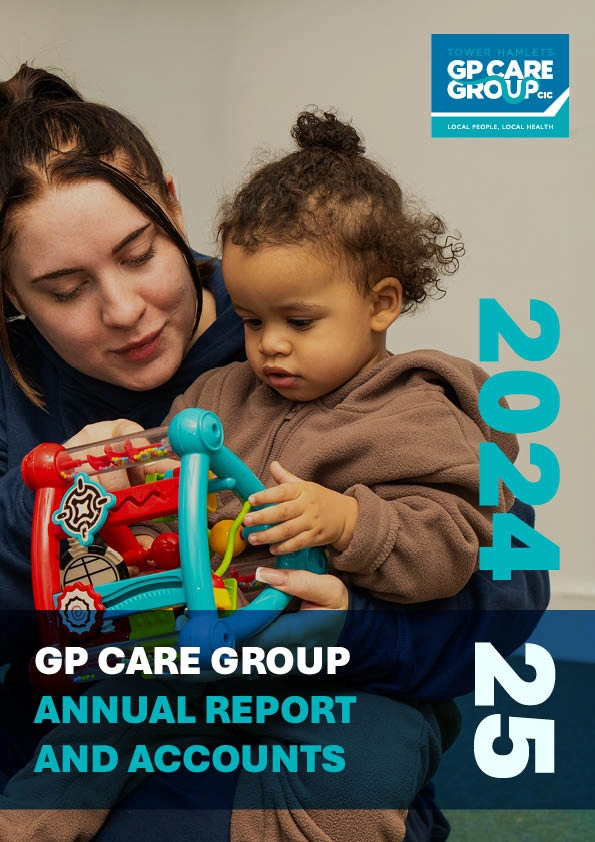
Watch our GP Care Group Annual Report 2020/21
Integrated Urgent Primary Care
Over the last six to nine months the Urgent Treatment Centre has seen an increase from 150 patients per day to over 300+ per day.
The Urgent Treatment Centre (UTC), Out of Hours, and Single Point of Access have been transformed over the last year to form the Integrated Urgent Primary Care (IUPC) Services and for all teams to work under one service.
Clinical and non-clinical staff have been cross-trained to work across all services with an aim of creating a GP-led Urgent Primary Care Service in the community. As part of the NHS long-term plan in reducing pressure from the Emergency Department (ED), the UTC has been a success and reduced the number of patients seen in ED with more than half of patients attending ED, being streamed to UTC.
The Urgent Treatment Centre saw over 45,000 patients from April 2019 to March 2020 and has seen a significant increase in the number of patients over the last six to nine months from 150 patients per day to over 300+ per day. Alongside the spike in demand other challenges facing the UTC have included the service's waiting room capacity, waiting times, and staff shortages.
The UTC has recently introduced several improvement projects and worked alongside commissioners, NHS 111, and Barts Health on ways to tackle this. These improvements include access to Extended Primary Care Hubs, 111 UTC direct bookings, introducing a see and treat model, and an appointment-based system to manage internal clinical queues. The UTC also offers services including referrals to Social Prescribing for residents of Tower Hamlets and a GP registration service for those not registered with a GP practice.
Various Clinicians from the Integrated Urgent Primary Care team were deployed to assist in a COVID-19 Project called ‘Admission Avoidance’ in Tower hamlets, which involved a team of GPs, ANPs, and Healthcare Assistants. The aim of the project was to support and manage patients being admitted into hospitals and support patients that were fit to leave the hospital by monitoring them through a virtual ward and home monitoring.
The UTC as a front-facing service went through significant pressure during the COVID-19 Pandemic with staff shortages. The management team would like to thank all the IUPC team for sticking together and ensuring the service was delivered for residents and guests of Tower Hamlets.
The UTC extended its services by supporting the vaccination programme via a Roving Team in the community, ANPs vaccinated vulnerable adults at home and in various care accommodations across Tower Hamlets.
The GP Out of Hours (OOH) service provided primary care support for patients in Tower hamlets via telephone triage, face-to-face appointments, and a home visiting service. This reduced the number of patients attending ED and supported patients to manage their symptoms at home. From March 2019 to April 2021 the OOH service reviewed over 13,000 patients and completed over 800 home visits.
Our Single Point of Access (SPA) Admin Team has worked through the last year processing over 25,000 referrals to specialised clinical teams in the community. The team has also provided telephone service for housebound and palliative care patients residing in Tower Hamlets.
Advocacy and Interpreting Service
Due to the pandemic, service performance figures at the beginning of the year indicated a dramatic drop in both interpreting and advocacy activities. Then service Post COVID-19 Steering Group that was launched worked on new ways to reach out to various communities the service has always served to reassure them and make them aware of how to access the service under the new COVID-19 crisis environment.
The shift of all language support activities and advocacy to telephone/ video conferences due to COVID-19 also reduced the Newham Language Service face-to-face and telephone interpreting bill by 2/3. Likewise, there was very minimal use of the Zero Hours Team.
With the intervention of the Post COVID-19 Steering Group measures, service performance figures for June 2020 started indicating a significant increase in service demand for the Advocacy & Interpreting service compared to the previous two months. But the service immediately noticed that there are too many GPs who were calling Newham Language Shop (NLS) agency direct rather than coming through our service, and this was generating a huge bill for the Service. To ensure that this trend does not continue, the Advocacy & Interpreting service introduced an On-Demand Service, which started with Bengali/ Sylheti then Somali and Turkish to ensure GPs use the in-house teams for these languages.
Then COVID Vaccination centres were launched in December 2020 and the Advocacy & Interpreting Service was at the forefront to ensure that those using English as a second language, especially the elderly did not miss out on having the COVID vaccines, given that they were the first on the queue. By the end of March 2021, the Advocacy & Interpreting Service had provided a total of 548 hours to the three vaccination centres - Queen Mary’s, Newby Place Practice, and Cable Street.
The introduction of On-Demand Service and the reduction in service demand due to COVID-19, led to a dramatic drop in the use of Zero Hours. The shifting of all service activities to telephone/video conferences and the change to the new booking system - Interpreter Intelligence; and the returning of office facilities to Bart Health created an average cost saving of £70,000 by the end of the year for the service.
0-19 Services
The service's COVID-19 Children Shielding Programme which supports children who have complex needs won the HSJ Partnership C19 Partnership Award.Over the last six to nine months the Urgent Treatment Centre has seen an increase from 150 patients per day to over 300+ per day.
2020 to 2021 has been the most challenging year that the 0-19 service has experienced and has had to respond at speed to the COVID-19 Pandemic and Lockdowns. This was to ensure the GP Care Group's front-line service to all children and young people, and families were maintained. We are proud to share that we were able to protect 0-19 services from deployment into acute services.
Our Principles for COVID-19 Services delivery was and remain to put service users first. We achieved this through the continuation of service delivery to Children/Young People & Families, amid national guidance from Public Health England that Health Visiting, Family Nurses Partnership, and School Heath Services should pause during Lockdown.
In April 2020 through the 1st Lockdown, we introduced the pace Work from Home model by a swift introduction of a digital and mobile service delivery through equipping all staff with Laptops, MS Teams, SharePoint, and AccurX video calling software. The service's top priority was Safeguarding vulnerable children and families and we quickly produced COVID-19 Guidance for 0-19 staff highlighting the additional vulnerabilities staff should be alert to during the crisis and conversations to have with parents to identify these. In particular, promoting enhanced support regarding domestic abuse has given the expected increase due to lockdown.
As expected, the service saw an increase in vulnerable families with first-time mums and parents struggling to cope emotionally and mentally due to Lockdown and the lack of social support; families reporting domestic violence, financial hardship due to furlough and loss of employment, and overcrowding issues have been exacerbated due to Lockdown and shielding requirements
The service ensured that all our vulnerable families were reviewed including undertaking COVID-19 risk assessments and signposting to the Borough COVID-19 support services. The teams maintained the delivery of all mandated contacts via video calls, and our Family Nurse Partnership service resumed face-to-face support through home visits, park, and walk and talk approaches.
- The delivery of Home Visits for vulnerable antenatal visits, NBV to first-time parents and three to four months reviews at Health Visiting Hubs and Children’s Centres, and clinical assessments of other families requiring F2F at CC C19 Partnerships.
- Family Nurse Partnership Young Parents Group at Children’s Centres
- The Launch of ChatHealth texting service for 11–19-year-olds to enable YP’s confidential issues to be raised and support offered.
- Webinar approach for school staff “health needs” training: Young People drop-ins & Health Promotion webinars for PSHE & digital parent and YP feedback forms
- Introduced digital NCMP health questionnaires for Reception and Year 6.These were particularly important as the NCMP programme was paused nationally.
- We ensure the C19 safety of all our staff through COVID-19 risk assessments, DSE assessments, and stress risk assessments.
- Regular team meetings via MS Teams and staff webinars. The informal team get-togethers are held in all localities.
We are proud to share that the 0-19 Service's Co-Led COVID-19 Children Shielding Programme where our Nursery nurses led a weekly check-in call and signposting/referral support for families with children who have complex medical needs won the HSJ Partnership COVID-19 Partnership Award.
The service also supported vulnerable families through a partnership with Save Child UK, COVID-19 Initiative: Accessing support for our Vulnerable families where families were given play resources, IT equipment, and food vouchers.
- Staff Well-Being: managing staff COVID-19 anxiety, bereavement, shielding, the intensity of work on return to face-to-face.
- The intensity of completing an assessment (digitally/telephone) & limitations and concerns about what could be missed due to not being able to read body language cues etc.
- Increased Safeguarding Risk due to COVID-19, families, and young people shielding
P-RESET Service
The P-RESET service's alcohol screening numbers remained the same throughout the pandemic, with the service reaching our annual target of 35% for patients.The service's COVID-19 Children Shielding Programme which supports children who have complex needs won the HSJ Partnership C19 Partnership Award.Over the last six to nine months the Urgent Treatment Centre has seen an increase from 150 patients per day to over 300+ per day.
P-RESET, the GP Care Group's primary care drug and alcohol service is commissioned by the Drug and Alcohol Action Team in the London Borough of Tower Hamlets to provide the following in general practices in the borough:
- Opioid Substitute Prescribing
- Problem Alcohol use Identification and Brief Advice (IBA) (Excluding HE1)
- Primary care focused Annual Health Checks and Plans for those registered as having substance misuse problems. (Excluding HE1)
The COVID-19 pandemic meant the suspension of face-to-face and non-essential practice work from lockdown in March 2020. For P-RESET this meant stopping annual health checks, and initially alcohol screening. Opiate substitute treatment (OST) review, at least monthly by the clinician, and prescribing for those in shared care continued, with remote consultations in partnership with RESET care coordinators, discontinuation of most supervised consumption and longer dispensing intervals because of infection risk for patients, the pharmacies, and the clinicians.
After lockdown, in June 2020, while it was clear that COVID-19 continue to be present, we needed to put in place a medium-term ‘restoration’ solution to deliver clear health outcomes for those vulnerable because of drug or alcohol problems in the COVID-19 context, whilst agreeing and effectively performing against newly agreed KPIs agreed with LBTH Drug and Alcohol Action Team (DAAT) commissioners. This was planned and then rolled out across quarter 2 2020-2021.
- As GP Practices went largely remote working, to continue effectively screening for alcohol, P-RESET with the support of one of our locality clinical leads, promoted the use of AccuRx to practices as they can batch screen patients for alcohol remotely for Audit C via message. This meant that our alcohol screening numbers remained largely the same throughout the pandemic and we reached our annual target of 35% for patients with the most recent AUDIT screen 20+ who are referred to RESET Treatment Service.
- Alcohol Awareness Week 16th-22nd November - For Alcohol Awareness Week, P-RESET sent an email campaign to practice staff which included facts about alcohol, the importance of screening, sharing stories, and relevant signposting.
- Despite the pressures of the pandemic, our practices achieved 77% of patients eligible for Cytology Screening, a great achievement.
Despite this disruption, we have still managed to provide continuity for the patients in shared care for Opiate Substitute Treatment across our practices in the borough (around 220).
We thank our practices for continuing to support our vulnerable patients. The Care Group supports the objectives of the London Borough of Tower Hamlets with their commitment to providing a support and treatment system that equips our patients with the tools to build their capacity and move towards a life where drugs and alcohol do not negatively impact their lives.
Tower Hamlets Training Hub
The Training Hub's transition to delivering online training during the pandemic resulted in 120 events taking place, with over 3,000 participants.The P-RESET service's alcohol screening numbers remained the same throughout the pandemic, with the service reaching our annual target of 35% for patients.The service's COVID-19 Children Shielding Programme which supports children who have complex needs won the HSJ Partnership C19 Partnership Award.Over the last six to nine months the Urgent Treatment Centre has seen an increase from 150 patients per day to over 300+ per day.
The 2020/21 year has been another progressive year for the Training Hub with a sustained level of training activities and additional exciting developments. The service has increased its capacity and capability in the year delivering further innovative programmes of work.
The team is continuing to work with our local Integrated Care System, Tower Hamlets Together ensuring the Training Hub is playing a critical role in local workforce transformation work. The strategic developments of the East London Health and Care Partnership and its involvement has been interesting and the shift in empowering the Training Hubs across the region to support the workforce development programme at scale.
- Opioid Substitute Prescribing
- Problem Alcohol use Identification and Brief Advice (IBA) (Excluding HE1)
- Primary care focused Annual Health Checks and Plans for those registered as having substance misuse problems. (Excluding HE1)
Amongst our key highlights have been addressing some of the workforces challenges currently present in Primary Care, the Hub this year launched some very exciting initiatives including a multi-professional coaching and mentorship faculty. The programme enables inclusive access to one-to-one support for all primary care staff working locally. The team also introduced their Virtual Reality-based ‘Through the Eyes of Programme’ which is targeted at empathy-building as a form of improving understanding of various health conditions.
The service continues to be the leading Training Hub in London recruiting and retaining newly qualified GPs. The year saw another 13 new GPs join and 22 retained from the previous year.
The group has been ably supported via access to peer support and a fellowship programme funded by NHS England and Improvement. In addition, another cohort of new Nurses commenced training through our ‘Open Doors’ recruitment and support incentive.
Outside of primary care, the service has supported local schools to be more mental health aware. Over 40 schools in Tower Hamlets have benefitted from the Training Hub's delivery of Mental Health First Aid training, ensuring London leading numbers for numbers of people trained. In addition, the Team's Mental Health and Suicide Prevention work has been recognised through the awarding of a three-year contract to lead on training for North East London by our regional Suicide Prevention network.
With the challenge of COVID-19 the team has seamlessly transitioned the delivery of our training exclusively to online. This has resulted in over 120 events taking place and over 3,000 places being filled in courses. The team has additionally provided regular wellbeing events for staff, which has been received very positively. They have also had the opportunity to support local medical schools, giving students access to one-to-one support from local experienced GPs in what has been a very turbulent year for students.
The Training Hub is often recognised as an enabler for education and training; however, it also has immense potential to support staff wellbeing and joy at work. It recognises that these are critical components to attracting the future workforce and retaining the current. Training Hub is keen to ensure there is always a strand of work to support this area to ensure that Tower Hamlets remains the best place to work in the country.
Also important is the team's role in addressing inequality and promoting inclusion. This is a core workforce issue. Discrimination of any sort should have zero-tolerance. We aim to ensure locally and regionally that we prioritise this area so that all people have equal opportunity and support to reach their full potential in the career they choose to pursue.
Social Prescribing
The Social Prescribing service has made 8,000 referrals for support, which is a 70%+ increase on the numbers from 2019/2020.
During this last ‘Pandemic year’ Social Prescribers have been at the forefront of the Pandemic Response - on the ground for local residents. With over 8000 referrals for support, a 70%+ increase in the numbers from 2019/2020, our team has been a vital link between isolated/in-need residents and local provision/help.
This ‘pro-active’ approach from receiving a referral, contacting the resident, assessing need, and actioning support, has been complemented by the ingrained ‘reactive’ qualities of the team. When an emergency COVID-task needed to be undertaken, it was Social Prescribers who stepped up. Kick-starting the local Test & Trace calling, co-ordinating medication deliveries, cold-calling vulnerable patients from lists, sorting food parcels, linking in the new local Covid support groups, cancelling COVID vaccination appointments when vaccination deliveries failed to materialise - just some of the numerous tasks undertaken (many at short notice), with no fuss, just a passion to serve their community.
During this period, the service has also had to adapt its working practices to factors such as no access to practices, working from home and local agencies providing limited/restricted services to refer to. The ultimate change has been the lack of face-to-face engagement with residents and the adoption of phone and/or video appointments, which Social Prescribers have worked hard to make seamless and effective.
The service dealt with 8,196 referrals in 2020 to 2021 financial year. We have exceeded the 12-month target of 7,200 by 14%.
The basic premise of our intervention was to work with the most vulnerable children identified by services working with children and young people stakeholders. Early research suggested that the disruption caused by the pandemic to educational, social, and recreational activities and community services has had an impact on children’s mental health and heightened the risk of abuse and neglect. It also showed a disproportionately negative impact on children with pre-existing behavioural conditions like Autism or those who rely on community or specialist health services. The service was aware that the socio-economic impact of the pandemic was likely to be felt hardest by marginalised families and children.
During this pilot, the Social Prescribing team worked with 213 families with children waiting for Autism assessment and 412 families with children identified as medically vulnerable.
The Social Prescribing service began working with the Health Tree partnership. This initiative came about through a successful collective bid to the Arts Council - Thriving Communities Fund and provides enhanced referral pathways for our Social Prescribing Team to refer to local arts initiatives.
The community-led arts activities, delivered as part of the programme, provide us with access to a proven alternative approach to wellbeing.
Participation in the arts can improve health outcomes for patients, by promoting wellbeing, and strengthening communities by providing new opportunities for social connection. This development aims to support some of our most vulnerable residents, particularly through COVID recovery.
Safeguarding Children Team
The Team strengthened the GP Care Group's safeguarding children governance processes through the implementation of the Safeguarding Subcommittee.
The GP Care Group (GPCG) Safeguarding Children Team tupe’d into the organisation from Barts Health NHS Trust in October 2019.
- Provides safeguarding children and domestic abuse support to GPCG staff:
- Safeguarding children and domestic abuse advice to staff in hours
- Safeguarding children training L1-3 to GPCG staff (L2/3 has been via e-learning during Covid, virtual training is now being introduced with a plan to offer F2F training when safe to do so)
- Provides 1:1 or group safeguarding children supervision to clinical GPCG staff
- Supports the Tower Hamlets Multi-Agency Safeguarding Hub (MASH):
- Post the referral of a child to Children’s Social Care, supports the multi-agency front door team in real-time to risk assess and identify the appropriate level of support that children and families require by sharing relevant GPCG information
- Provides demographic information as required to support the identification of families requiring support.
- Development of safeguarding children and domestic abuse policies, procedures, and standard operating procedures (SOP’s)
- Chairs the GPCG Safeguarding Subcommittee
- Oversees the GPCG safeguarding children action plan and audit schedule
- Completes the paediatric liaison for the Integrated Urgent Primary Care Service
- Represents GPCG at strategic and operational safeguarding children and domestic abuse-related multi-agency partnership meetings
- Completes GPCG reports to inform Local Learning Reviews, Child Safeguarding Practice Reviews, and Domestic Homicide Reviews.
- Oversees the Child Death Review processes for GPCG
- Compiles safeguarding data for internal/external reporting
- Successful Integration of the Safeguarding Children Team into GP Care Group.
- Strengthened the GPCG safeguarding children governance processes through the implementation of the Safeguarding Subcommittee.
- Developed 0-19 COVID safeguarding guidance and implemented a COVID risk assessment framework.
- Ensured safeguarding team business continuity during COVID/ lockdown. All safeguarding team activity and MASH functions continued within expected timescales despite a significant increase in demand and a period of reduced staffing capacity.
- Safeguarding Children Training Policy
- Safeguarding Children Supervision Policy
- CDOP SOP
- 0-19 Service Level Definitions SOP
- No Contact SOPSchool Health LAC SOP
- Clinic 1 Paed Liaison SOP
- Development of a THGPCG safeguarding children competency framework.
- Development of the GP Care Group Safeguarding Children SharePoint Site which is accessible to all staff.
Patient Experience Team
The COVID-19 vaccines rollout provided opportunities for the team to support the process, guiding and reassuring patients while gathering direct feedback.
The Patient Experience Team (PET) plays a key role in improving the experiences of patients and service users across health and social care in the Borough. The team seeks and gathers the views of service users, patients, and carers, and also talks to frontline staff, Service Managers, and Commissioners across the system to hear insights into what is working well and what might be improved. The views of providers and users of services are often the same, and this enables changes to be implemented more easily.
The team gathers qualitative feedback using a variety of methods which includes undertaking interviews with individuals and facilitating groups, conducting surveys, and collating feedback forms. Pre-pandemic, these methods were conducted predominantly face to face but have now moved to telephone and virtual platforms such as Zoom and Microsoft Teams.
By engaging with patients, service users, and providers, empowers people to speak up and share their views on how well services are meeting needs, leading to a better understanding of the challenges faced and ways to address and improve services. This helps promote confidence that local voices are being heard and enables better trust and partnership working between service users and providers. The goal of the PE team is to listen to all views and devise recommendations for positive change, leading to improvement in services and a valuing of the experience and views of users and providers.
The team achieved much valuable feedback despite the challenges presented by the pandemic. Although opportunities for taking forward recommendations were somewhat delayed there are many improvements that were recommended that are being taken forward and will be useful in the event of another partial or total lockdown.
The work undertaken on the experience of those Shielding will enable building on best practices in the future to ensure the structures and systems that worked well can help patients be supported and connected in the future. Interviews with a sample of people who were Shielding revealed amongst other issues:
There was significant variation in the ways that patients received notification about advice to shield.
There was some confusion about the duration of shielding being advised, poor communication as to why it was regarded as safe to stop shielding without seeking clinical views, and a lack of further advice once cases began to rise again. There is a potential benefit in exploring communication strategies further and developing system-wide support and optimisation of resilience and self-care within clinically vulnerable groups should COVID remain a potential risk.
The digital divide motivated the PE team to write a paper on the issues and challenges associated with using remote ways of communicating and the implications for obtaining feedback from as wide a group as possible. This was raised and discussed across the Patient/Carer and User Experience Leads monthly meeting to encourage shared learning, and suggestions emerged to address some of the resulting inequalities, restrictions, and impact. It was concluded that while the use of digital media by clinical teams can offer emotional support as well as an extra layer of assessment and reassurance when compared to a non-visual telephone assessment, there are issues that make face-to-face contact more effective in many circumstances, including building trust and rapport when obtaining feedback on services.
Virtual working enabled frequent team meetings to take place and a strategy for performing and delivering quality feedback was devised and implemented.
Virtual Outreach: the team networked with service providers via various platforms, attending online forums, meetings, and coffee mornings. This helped maintain trust, understanding, and engagement.
Skilling up: The team familiarised themselves with relevant apps and software and approached and tailored communication with service users in ways that suited them, including email, landline, and mobile telephone calls, Facetime, Zoom, and Teams.
Flexibility: The team was flexible in terms of their availability to enable and offer times to suit individual patients and carers and to attend events hosted by partners.
The Review of support for informal carers is underway, and carer and service providers’ feedback to date has increased understanding of the challenges faced while reinforcing awareness of the often-hidden work that carers of all ages undertake. The team also talked with service providers and learned of some creative approaches to supporting people during the lockdown, such as at Russia Lane Day Centre which supports people with dementia. The team rerouted staff to support the cared-for person at home while the Centre was closed, providing diversionary activities in their familiar environment while the carer had a break. This model can offer a valuable approach that could be adopted should there be any future lockdowns.
The vaccine rollout provided opportunities for two of our team to support the process, guiding and reassuring patients while gathering direct feedback which helped the teams to understand views and experiences including anxieties which in turn helped to inform the provision of appropriate approaches, information, and support.
The image below is of our first face-to-face meeting held in Victoria Park.
Open Doors
From April 2020 to March 2021 the interest in the Open Doors programme was high with almost 70 applications for the GPN programme.
The Open Doors General Practice Nurse (GPN) Programme has been running since 2008. The programme facilitates the transition of registered nurses from secondary care to primary care. Nurses undertaking the GPN programme at the City university of London, study towards either a degree or postgraduate diploma. The recruitment process is thorough, involving several stages. Demand for the programme is high and places are limited. Experienced staff provides one-to-one support and development in the practice setting. The Open Doors team also delivers group teaching sessions to Health Care Assistants (HCAs) and those wishing to become HCAs. This includes the Care Certificate, Clinical skills, and the HCA forum.
There has been a significant change in staff during the pandemic, a new manager and four new clinical tutors started, three of whom were all ex-Open Doors trainees. During this period one Clinical Tutor retired.
The interest in the Open Doors programme was high with almost 70 applications for the GPN programme. Four trainees commenced the programme in February 2021.
The action learning group (ALG) moved online. ALG helps the GPN trainees bridge the gap between theory and practice. It includes teaching that may not be covered in the university, as well as some external visits. It provides a safe environment to discuss their time in practice and is facilitated by one of the team.
Quality monitoring of host practices continued during the pandemic and moved online. The four first-year trainees and three second-year trainees are all doing well. This is demonstrated in the practice reviews which are led by the Open Doors Manager and enable the clinical tutor, practice mentor, and the trainee to contribute. The purpose of the review is to ensure suitable learning opportunities are provided, review progress, address any issues and focus on development needs.
Three trainee GPNs finished their two-year training in January 2021. Two were employed in Tower Hamlets, the other was due to go on maternity leave. An evaluation of the programme was undertaken, and the feedback received was positive.
Much of the group teaching was put on hold during the lockdown. This has been restarted, and where possible carried out face to face or moved online. Virtual delivery has incorporated various teaching methods such as PowerPoint presentations and video clips as well the use of software such as poll everywhere and Mentimeter which allows for attendees to participate using a smart device.
In December 2020 and January 2021, the team planned and delivered at pace new training on the COVID-19 vaccines to HCAs across the Borough. This was well received. Seven health care staff participated in the Clinical skills course in 2020.
“This course made me confident to talk to patients. I feel my communication skills are much better….”
“I have learned about myself, for example how to build up relationships with others and share knowledge. It’s helped me to develop my practice and build my confidence”
“It has made me strong as a person. More confident in my clinics and I can answer more patient questions. I have learned how to deal with difficult situations…”
Finance - Annual General Meeting
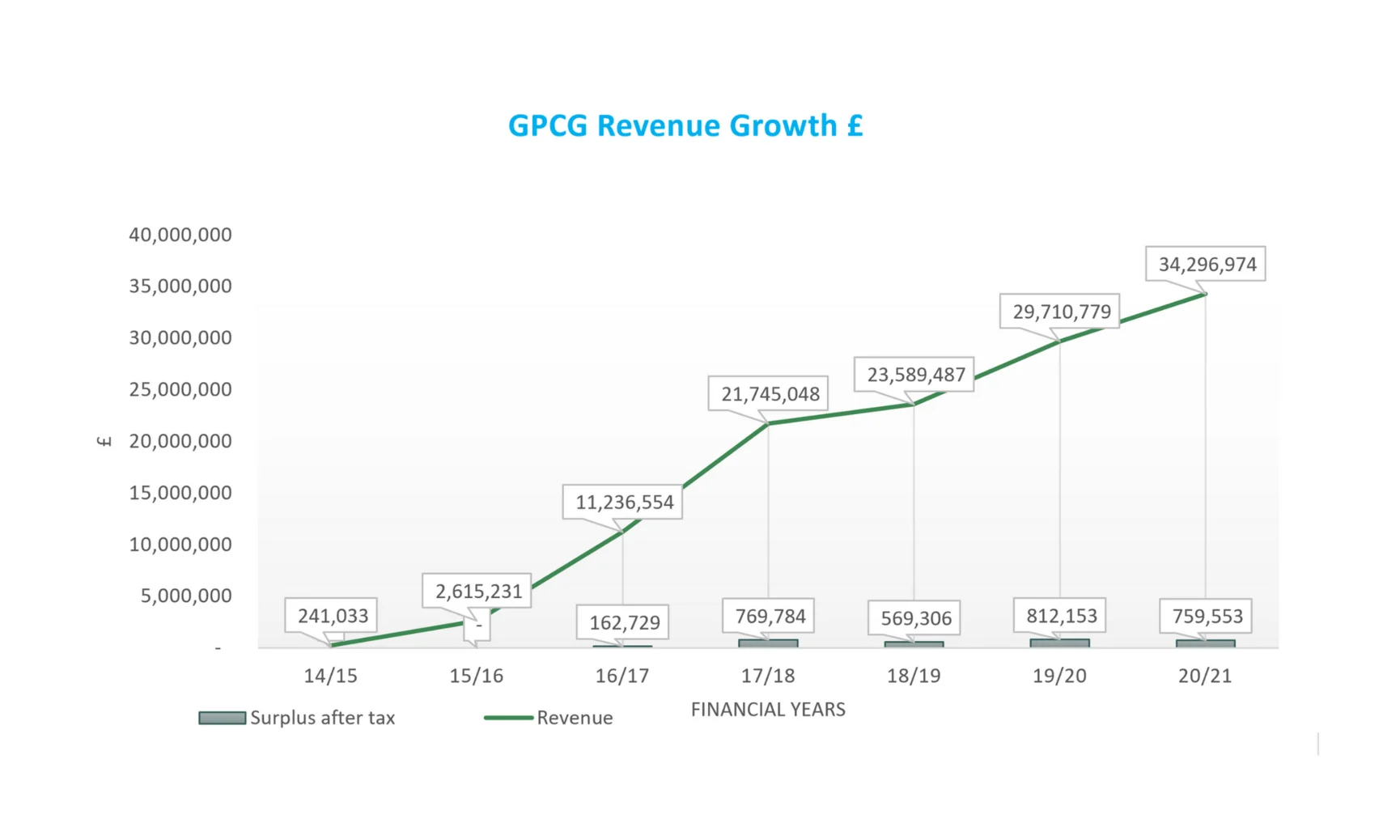
During 2020/21 the GP Care Group's financial stability remained strong. This strength allowed the federation to support the local system and primary care.
At the start of the financial year, the UK was amid a national lockdown, with all but essential services closed the population at large was told to stay at home. During 20/21 GP Care Group financial stability remained strong, and it was this financial strength that allow the federation to actively support the local system and provide capacity in primary care and in some areas expanding the service offering in innovative ways, such as the home monitoring service which was implemented locally months before the national policy was issued.
New Contracts
COVID Response - The GP Care Group was awarded several services in relation to COVID response, these included COVID Testing for Care Homes, Supported Accommodation, and other health care settings. Local Track and Trace Service, Home Monitoring Borough-wide service provision. 111 Local GP Support for clinical calls and COVID Vaccination Phase 1.
Our Workforce
In March 2021, our GP Care Group workforce saw an increase of 12% from the previous year.
- March 2017 Headcount = 163
- March 2018 Headcount = 325
- March 2019 Headcount = 391
- March 2020 Headcount = 542
- March 2021 Headcount = 606
12% increase in headcount over the year.
- Full time = 190
- Part time = 130
- Bank = 286
Total = 606
- Nurses = 165
- Support Workers & Nursery Nurses = 64
- Doctors = 99
- Advocates/Interpreters = 65
- UTC/OOH Support Staff = 43
- Pharmacists = 17
- Allied Health Professionals = 9
- Range of other specialist and support roles = 144
Total = 606
- Nurses = 101
- Support Workers & Nursery Nurses = 36
- Doctors = 3
- Advocates/Interpreters = 23
- Urgent Treatment Centre and Out of Hours Support Staff = 18
- Range of other specialist and support roles = 82
Total = 263
About the service
We provide Human Resources support for the Care Group. This covers the full range including managing the payroll and Occupational Health service contracts, recruitment, advising with employee relations cases and Employment Tribunal claims, providing workforce data, and supporting TUPE transfers, service developments and organsiational change.
Highlights of your service from April 2020 to March 2021
During this year we have successfully developed the health & wellbeing offer for staff. In addition to our free counselling service we have added, this included virtual wellbeing sessions, advice, and guidance about managing stress and keeping healthy, including desk exercises and promoting regular walks during the day. The HR Team brought the elements together into the Employee Health & Wellbeing Programme and also established the staff Health & Wellbeing Forum. The organisation continues to develop the range of advice and support available.
The GP Care Group reviewed and refreshed our recruitment service to ensure we continue to offer a great service that is efficient and safe, introducing online documentation. We adapted to the covid right to work check requirements and made changes to ensure compliance with the Government statutory Good Work Plan. In November we responded at pace as the vaccine service was mobilised, supporting the rapid on boarding of 100 new staff and issuing bank contracts for 94 existing staff so that they could also join the programme. The HR Team also worked in partnership with Volunteer Centre Tower Hamlets to recruit over 100 volunteers to support the vaccine centres.